Communion of St Jerome
Comunione di San Girolamo
Take a moment to look closer.
Domenichino · Vatican MuseumsDomenichino · Communion of St Jerome · 1614
Guide
This great altarpiece shows a rare subject: the last communion of Saint Jerome. Jerome was a scholar and priest of the early Church, famous above all for translating the Bible into Latin. Here he is about ninety years old and close to death, and he wants to receive communion one last time.
Look first at the old man in the lower left. He kneels at the altar, and his followers hold up his thin, almost naked body. A red cloak is slipping from his shoulders. Opposite him, a priest in a golden vestment bends down and holds out the small white host. Close to the saint, a woman kneels and kisses his hand. Above, little angels hover in the archway, a sign that heaven is near. In the corner rests a lion, the saint's traditional companion.
The painter is Domenichino, a young artist from Bologna who had come to Rome in 1602 to work with Annibale Carracci. A charitable confraternity dedicated to Saint Jerome ordered the picture for the high altar of its church in Rome, San Girolamo della Carità. It was finished in 1614.
It was the painter's first public altarpiece, and it made him famous. Romans flocked to see it, and later artists placed it beside Raphael's Transfiguration among the greatest paintings in the city. Yet it also caused a scandal, because a rival accused the painter of copying an older picture. Take a moment with the face of the dying saint, and you will see why it moved so many people.
The work
The canvas is more than four metres high and painted in oil. The scene takes place inside a church. Tall columns with Corinthian capitals frame a wide arch, and through it we look out onto a landscape with trees and distant buildings. According to one account, the setting is Bethlehem, where Jerome spent the last years of his life translating the Bible.
The figures form two groups that face each other. On the left is the dying saint. His body is shown without flattery: the ribs stand out, the legs are stiff, the hands hang down. His disciples hold him up and lean in close, and one of them dries his eyes. The museum's text identifies the woman who kisses his hand as Saint Paula, who founded monasteries in Bethlehem together with Jerome. Another account sees her as a granddaughter of Paula, who bore the same name.
On the right stand the clergy. The old priest in a golden vestment holds the host over a small gilded plate. Behind him, a deacon in a pink robe carries the chalice, and a young assistant in white kneels with a book. Their shining silks contrast sharply with the bare body of the saint. One interpretation reads their vestments as a reminder of the Roman and Greek traditions of the Church, the two worlds in which Jerome lived and worked.
Above them, four winged children float down from the sky, and tall candles burn on the altar. At the bottom left a lion lies quietly. Since the Middle Ages the lion has been the attribute of Saint Jerome, so nobody could mistake who this old man is.
The colours are warm and strong. Gold, red and pink stand out against the dark architecture, and the light picks out the saint's pale skin and the small white host, the true centre of the picture.
Context
The painting was made in Rome in the early seventeenth century. Its painter, Domenico Zampieri, known as Domenichino, was born in Bologna. In 1602 he came to Rome, called by his fellow citizen Annibale Carracci, and worked with him on the frescoes of the Farnese Gallery.
The patron was the Congregation of Saint Jerome of Charity, a brotherhood of lay people devoted to charity and prayer. Their church, San Girolamo della Carità, was being renovated in those years, and they wanted a new picture for the high altar. According to one account, Cardinal Pietro Aldobrandini, the protector of the brotherhood, helped to bring the commission to Domenichino. The sources differ slightly on the dates. The museum says the work was carried out between 1611 and 1614, while other accounts place the commission in 1612. The painter was paid 240 scudi, and the canvas is signed and dated 1614.
The subject was chosen with care. After the Council of Trent, the Catholic Church wanted images that stirred devotion and stressed the value of the sacraments. A great saint receiving the Eucharist at the hour of death was a powerful example for the faithful.
The composition was not invented from nothing. In Bologna, in the 1590s, Agostino Carracci, Annibale's elder brother and Domenichino's teacher, had painted the same rare subject for the church of San Girolamo della Certosa. The younger painter reversed the design like a mirror image, reduced the number of figures around the saint, added the woman who kisses his hand and changed the setting.
At the end of the eighteenth century the French took the painting to the Louvre in Paris, and a copy was made for the church. After the fall of Napoleon it came back to Rome, and it found a new home in the Vatican Pinacoteca.
Details
Begin with the whole picture. The composition is built like a stage. Columns and a great arch frame the scene, and the landscape opens behind it. The figures form a curve that runs from the saint on the left to the priest on the right, and the eye comes to rest on the small white host between them.
Now look closely at the saint. The painter shows old age with striking realism: the sunken chest, the toothless mouth, the wandering gaze, the stiff legs. Only a red cloak and a white cloth cover him, and the cloak hangs so loosely that it seems about to fall. A woman bends low to kiss his hand, while a young man looks up at him. Behind the disciples, at the far left, notice the man in a turban. Figures like him remind us that the scene takes place in the Holy Land.
Move to the right, to the priest. His golden vestment catches the light, and he leans forward to offer the host. Beside him, the deacon in pink holds a gold chalice. Look also at the kneeling assistant in white, with a book in his hands and one bare foot showing beneath his robe.
Now raise your eyes to the arch. Four chubby angels drift down from the sky, holding hands. The one in front stretches an arm towards the saint. Angels in flight were one of the elements the painter took from his teacher's version.
Finally, look down to the bottom left corner. A lion lies on the floor with its head resting on its paws. Its presence tells every viewer at once that this is Saint Jerome. In the older Bologna painting, a skull sat in the corner instead, as a sign of death. Small changes like this show how the younger artist made a borrowed idea his own.
Details up close
Legacy
For almost two centuries this was one of the most admired paintings in Rome. Domenichino himself considered it his masterpiece. Artists such as Andrea Sacchi and Nicolas Poussin set it on the same level as Raphael's Transfiguration. In the early eighteenth century the philosopher Anthony Cooper, Earl of Shaftesbury, called it the best painting in the world. Its fame was such that a mosaic copy was placed on one of the altars of Saint Peter's Basilica.
Yet the picture also stands at the centre of one of the most famous quarrels in the history of art. In 1620 the painter Giovanni Lanfranco, a rival who had also trained with the Carracci, accused Domenichino of plagiarism. At that moment the two men were competing for a major commission in the church of Sant'Andrea della Valle. To prove his point, Lanfranco spread a print of Agostino's painting, which was far less known in Rome than in Bologna.
The painter openly admitted that the older work had inspired him. His defenders, among them the biographer Giovanni Pietro Bellori and Poussin, called it a praiseworthy imitation. The writer Carlo Cesare Malvasia asked, with some irony, what painter does not steal in some way, from prints, from nature or from the works of others.
The debate touched a real question of the age. For artists trained in this tradition, imitation was not simple copying. It meant studying the best models and trying to surpass them. The affair did not ruin the painter, but for a time his notoriety eclipsed the fame of his skill.
Today the picture draws smaller crowds than it once did, and modern taste can find its old fame hard to understand. Still, standing before it, you can feel what earlier visitors admired: a clear, balanced composition and a deeply human image of death.
- Date
- 1614
- Technique
- Olio su tela
- Size
- cm 419 x 256
- Inventory
- 40384
- Image
- Musei Vaticani · © Governatorato SCV – Direzione dei Musei
- Official page
- www.museivaticani.va
Sources (7)
- Musei Vaticani – Domenichino, Comunione di S. Girolamo · official
- Vatican Museums – Domenichino, Communion of St Jerome · official
- Roma non per tutti – Domenichino's The Last Communion of St. Jerome · guide
- Wikipedia (en) – The Last Communion of Saint Jerome (Domenichino) · academic
- Wikipedia (it) – Comunione di san Girolamo (Domenichino) · academic
- Wikipedia (en) – The Last Communion of Saint Jerome (Agostino Carracci) · academic
- Wikipedia (en) – Domenichino · academic
In the same area
 Image failed to load
 Image failed to load
 Image failed to load
 Image failed to load
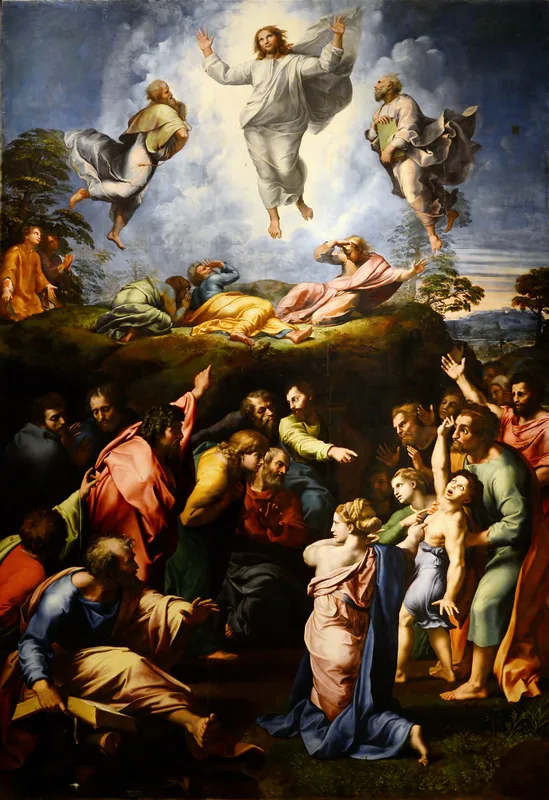 Image failed to load
 Image failed to load
 Image failed to load
Personal, non-commercial site. Image: Musei Vaticani · © Governatorato SCV – Direzione dei Musei.
Pinch or scroll to zoom