The Entombment
Deposizione
Take a moment to look closer.
Caravaggio · Vatican MuseumsCaravaggio · The Entombment · 1600 - 1604 ca.
Guide
This is one of Caravaggio's greatest masterpieces. It was painted in Rome in the early 1600s, for a family chapel in the church of Santa Maria in Vallicella, known as the Chiesa Nuova.
Look first at the body of Christ. It is heavy, muscular and pale, a real dead body, not an idealised one. Two men lower it with effort. On the left, the young John holds Christ under the shoulders. On the right, an older man, Nicodemus, clasps the knees in his arms. His bare feet grip the edge of a great stone slab, which seems to jut out of the picture, straight towards us.
Now let your eyes climb up the group. Behind the men stand three women. The Virgin is shown as an old woman, in the dark robes of a nun, her arms opening. Mary Magdalene bows her head and dries her tears. At the top, Mary of Cleophas throws her arms and her eyes up to heaven, in a cry of grief. From her raised hands down to the dead hand of Christ touching the stone, the whole group forms one long, falling diagonal.
The museum points out something unusual. This is not quite a burial. Christ is not being placed in the tomb. He is being laid on the stone of anointing, the slab on which his body will be prepared.
Notice the light. It falls from the upper left and strikes the bodies, while everything else sinks into darkness. This way of using light made the painter the leader of a true revolution in art. Other painters, from Rubens to Cézanne, came to copy this picture.
The work
The painting is an oil on canvas, three metres high. It was designed as an altarpiece, hung above an altar, so the viewer's point of view is low. We look up at the group as if we were standing inside the tomb, beyond the stone.
The composition is simple and grand at the same time. It is built like an ancient relief. The figures crowd together in a narrow space, and the movement runs down a strong diagonal, from the raised hands of Mary of Cleophas to the stone. As your eye descends, the emotion calms, from her cry through the quiet grief of the other women to the final silence of death.
Look at the two bearers. John, recognised by his youth and his red cloak, supports Christ on his knee and with his right arm. Without meaning to, his hand presses into the wound in Christ's side. Nicodemus grips the legs and braces himself at the edge of the slab. The painter balances the calm, dignified body with the strained effort of the men who carry it.
The details are painted with care. You can see wrinkles on the faces, folds in the clothes, the knot in the white shroud, the braids of one of the women, the veins and wounds of Christ, his ribs and muscles. This close attention to real life is typical of the painter's naturalism.
The colours range from the warm orange of the robe of Nicodemus to the pale skin of Christ. Only John wears several colours, a green garment and a red cloak, which stand out with the white of the shroud in the centre.
During a restoration, an inscription in the painter's hand was found on the back of the canvas. Its mysterious meaning is still debated.
Context
The church of Santa Maria in Vallicella was the home of the Oratory, the community founded by Saint Philip Neri. In the late sixteenth century the church was rebuilt, and its altars were dedicated to the mysteries of the Virgin. The second chapel on the right was dedicated to the Pietà, the lament over the dead Christ.
The chapel belonged to Pietro Vittrice, a close follower of Philip Neri and a trusted servant of Pope Gregory the thirteenth. He died in 1600. His nephew and heir, Girolamo Vittrice, took charge of the chapel and commissioned the painting. A document of 1604 describes it as new.
The dates are given differently. The museum proposes about 1600 to 1604. Other sources prefer 1602 to 1604, or 1603 to 1604.
By then the painter had been in Rome for about ten years. He arrived in 1592, and he was already famous and controversial. His early biographers often complained that he copied nature too closely and refused to idealise. Yet even they praised this work. Giovanni Baglione wrote that people called it his best painting. Gian Pietro Bellori also counted it among the finest works of his brush.
The picture stayed in the chapel for almost two centuries. In 1797, under the Treaty of Tolentino, it was taken to Paris and shown in the Musée Napoléon. It was the only work by the painter taken from the churches of Rome. After its return it entered the Pinacoteca of Pope Pius the seventh. The museum gives the year of return as 1817, other sources as 1816. A copy now hangs in the chapel.
Details
Take in the whole group first. It rises from the stone at the bottom to the raised hands at the top, and it is pressed close to us, against a dark background. Nothing distracts from the bodies and the gestures.
Now look up at the three women. On the left, in a white veil and dark robes, is the Virgin. Tradition usually showed her young, but here she is an old woman. Her arms open to the sides, following the line of the stone, and one hand hovers above the head of John. In the middle, Mary Magdalene lowers her face and wipes her tears with a white cloth. At the top, Mary of Cleophas lifts both arms to heaven. The three women show three different forms of grief.
Next, find the face of Nicodemus, just below them. He bends under the weight and turns his head towards us. He is the only figure who looks out of the picture. Some scholars see in his features a portrait of Michelangelo, whom the painter admired.
Then look at the body of Christ and at the hand of John under the arm. Look closer: the fingers slip into the wound at the side. The body is not the thin, bony figure of tradition. It is the body of a strong man, with veins and muscles.
Finally, look down to the lower left. Christ's arm hangs down, and his fingers touch the stone, together with the white shroud. The edge of the slab seems to push towards us. Below it grows a plant, commonly called mullein. People believed it had medicinal powers and kept away evil spirits. Few visitors notice it.
Details up close
Legacy
The painting was admired from the start, and its fame has never faded. It has been copied by artists as different as Rubens, Fragonard, Géricault and Cézanne. Each of them found something to learn in its weight, its light and its drama.
Scholars have also explored its many sources. Early biographers claimed that the painter despised tradition, yet he looked closely at great models. The body of Christ, with its hanging arm, recalls the Pietà by Michelangelo in the Vatican basilica. The figure of Nicodemus comes from another Pietà by Michelangelo, in Florence, where the sculptor gave his own face to that saint. The main group also echoes the Borghese Deposition by Raphael, so the picture sets the idealism of the High Renaissance against the painter's own naturalism.
How should we read the scene? For a long time it was seen as a burial, with the slab as the lid of a tomb. Other scholars disagree. They note that the group has the pyramid shape of a Pietà, and they read the slab as the Stone of Unction, the stone on which the body of Christ was anointed, today kept in the Church of the Holy Sepulchre in Jerusalem.
There is also a liturgical meaning. Mass was celebrated at this altar every day. When the priest raised the host and said, this is my body, the painted body of Christ was right behind him, as if offered to the faithful.
Finally, the painting marks a turning point. It belongs to the last years of the painter's life in Rome. With his dramatic light and his humble, real figures, he became the most important painter of the realist trend of the seventeenth century.
- Date
- 1600 - 1604 ca.
- Technique
- Olio su tela
- Size
- cm 300 x 203
- Inventory
- 40386
- Image
- Wikimedia Commons · Public domain
- Official page
- www.museivaticani.va
Sources (5)
- Musei Vaticani – Caravaggio, Deposizione dalla Croce · official
- Vatican Museums – Caravaggio, Deposition · official
- Wikipedia (en) – The Entombment of Christ (Caravaggio) · academic
- Wikipedia (it) – Deposizione (Caravaggio) · academic
- 维基百科(中文)– 将耶稣从十字架上放下 (卡拉瓦乔) · academic
In the same area
 Image failed to load
 Image failed to load
 Image failed to load
 Image failed to load
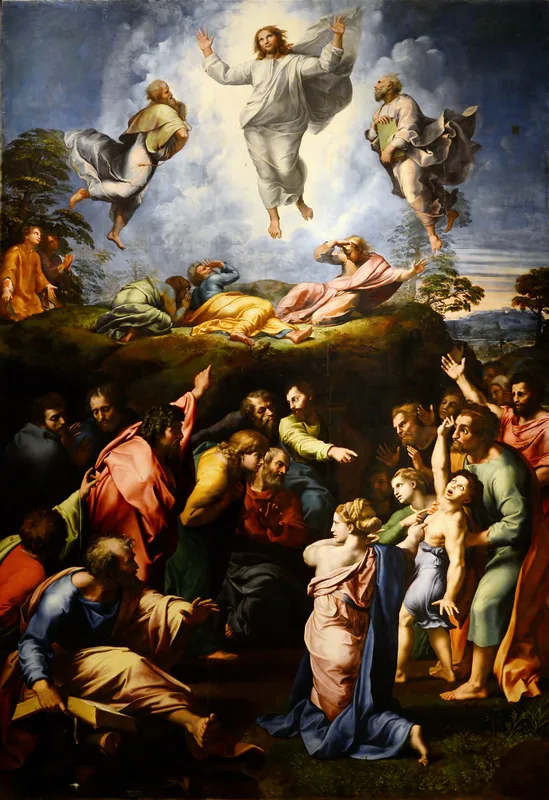 Image failed to load
 Image failed to load
 Image failed to load
Personal, non-commercial site. Image: Wikimedia Commons · Public domain.
Pinch or scroll to zoom